
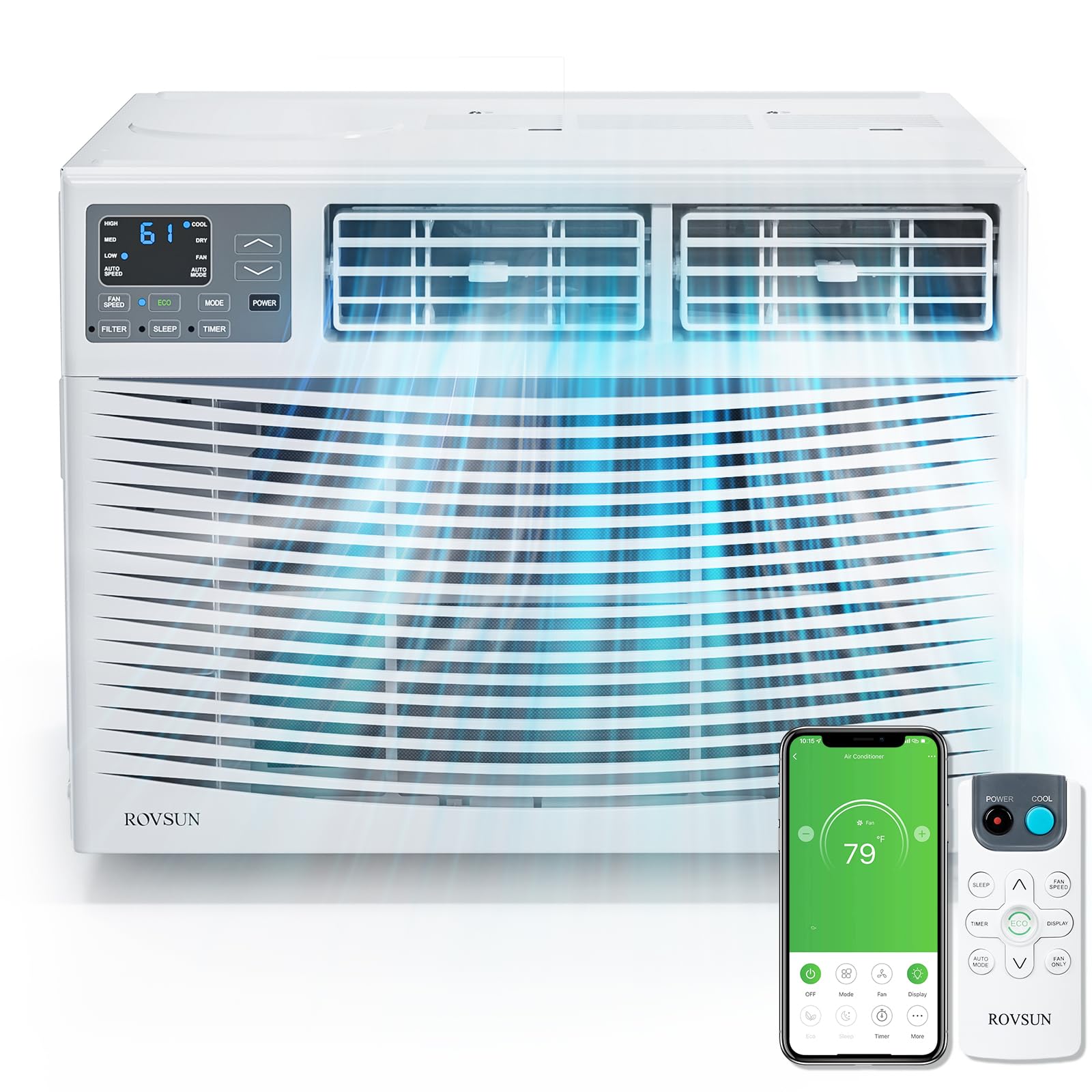
Window air conditioners are one of the most popular cooling solutions for bedrooms, apartments, and small homes thanks to their easy installation, affordable price, and reliable performance. If you want to manage household electricity costs properly, the first step is to understand **how many watts a window air conditioner uses**. Power consumption mainly depends on BTU cooling capacity, energy efficiency rating, room environment, and daily usage habits. This guide breaks down wattage by unit size, teaches you how to calculate power consumption, lists key influencing factors, and shares practical tips to cut down your energy bills.
一. Wattage by Window AC Size
Window air conditioners are generally divided into small, medium, and large models based on BTU range, with clear differences in power consumption and applicable room areas.
1. Small Window Air Conditioners (5,000–6,000 BTU)**
Perfect for rooms of 150 to 250 square feet such as bedrooms and small home offices. These compact units consume **450 to 600 watts per hour**. With low power demand, they are the most energy-saving choice for small spaces.
2. Medium Window Air Conditioners (7,000–10,000 BTU)**
Suitable for 250 to 450 square feet spaces like standard bedrooms and small living rooms. Their hourly power usage ranges from **900 to 1,200 watts**. They balance cooling performance and energy consumption well, ideal for daily family use.
3. Large Window Air Conditioners (12,000–24,000 BTU)**
Designed for large rooms of 450 to 1,500 square feet, including open-plan living areas and studios. The average wattage stays between **1,200 and 3,500 watts per hour**. Although powerful in cooling, they consume more electricity due to higher BTU output.
二. How to Calculate Window AC Wattage
There are two simple and practical ways to figure out your window air conditioner’s power consumption, serving different reference needs.
Method 1: Calculate with BTU and EER**
This is the most accurate way to measure actual operating power. The formula is:
Wattage = BTU ÷ EER
EER refers to the Energy Efficiency Ratio; the higher the EER, the more energy-efficient the unit. For example, a 10,000 BTU window AC with an EER of 10 runs at about 1,000 watts per hour. This method considers the unit’s efficiency and reflects real daily power use.
Method 2: Direct BTU Conversion
Use the fixed conversion factor: 1 BTU equals approximately 0.293 watt hours. Multiply the BTU rating by 0.293 to get the maximum theoretical power consumption. This number represents the peak power limit rather than regular operating wattage, so it is usually higher than the result from the EER formula.
三. Key Factors Affecting Power Usage
Many conditions change the actual wattage of a window air conditioner:
1. **Room Size & Insulation**: Larger rooms or poorly insulated walls force the AC to run longer and consume more power.
2. **Outdoor Temperature**: Extremely hot summer days increase the unit’s workload and raise energy use.
3. **Energy Efficiency Rating**: Units with higher EER consume far less electricity than low-efficiency models with the same BTU.
4. **Usage & Maintenance**: Setting overly low temperatures, running the AC for long hours, or having dirty filters and coils will all push up power consumption.
四. Easy Tips to Reduce Energy Bills
You can effectively cut electricity costs without sacrificing cooling comfort by following these simple habits:
- Keep the temperature set at 75–78°F, the most comfortable and energy-saving range.
- Use a timer to avoid running the AC when no one is home.
- Close curtains and blinds during the day to block direct sunlight and lower room temperature.
- Clean air filters and coils regularly to maintain operating efficiency.
- Improve window and door insulation to prevent cool air from escaping.
- Pair the AC with a fan to circulate cool air faster, allowing you to raise the set temperature properly.
五. Conclusion
The wattage of a window air conditioner varies greatly by BTU size, ranging from 500 watts for small units to 4,000 watts for large ones. Mastering wattage calculation methods and understanding the influencing factors help you choose the right model and use it rationally. With simple daily energy-saving habits, you can enjoy cool indoor air in summer while keeping electricity bills under control.